


 Cart
Cart
 sales@molnova.com



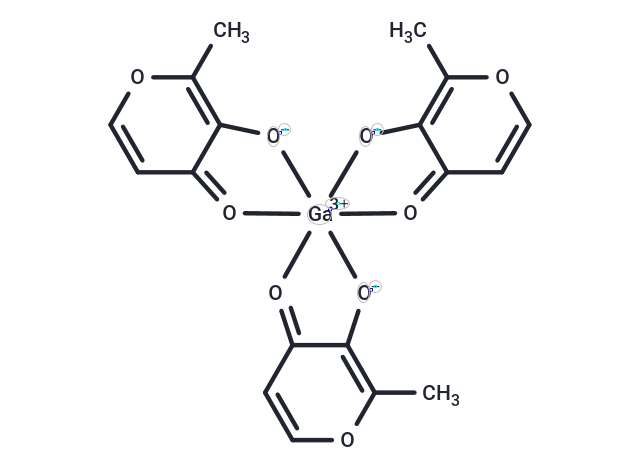
Gallium maltolate
CAS No. 108560-70-9
Gallium maltolate( —— )
Catalog No. M34262 CAS No. 108560-70-9
Gallium maltolate is a ribonucleoside-diphosphate reductase inhibitor.
Purity : >98% (HPLC)
 COA
Datasheet
HNMR
HPLC
MSDS
Handing Instructions
COA
Datasheet
HNMR
HPLC
MSDS
Handing Instructions
| Size | Price / USD | Stock | Quantity |
| 5MG | 38 | Get Quote |


|
| 10MG | 53 | Get Quote |
|
| 25MG | 90 | Get Quote |
|
| 50MG | 124 | Get Quote |
|
| 100MG | 177 | Get Quote |
|
| 500MG | 446 | Get Quote |
|
| 1G | Get Quote | Get Quote |
|
Biological Information
-
Product NameGallium maltolate
-
NoteResearch use only, not for human use.
-
Brief DescriptionGallium maltolate is a ribonucleoside-diphosphate reductase inhibitor.
-
DescriptionGallium maltolate (GAM) is an apoptosis inducer with anti-cancer and anti-inflammatory activity. Gallium maltolate (GAM)-induced apoptosis involves the oxidative stress and p53 pathways.
-
In Vitro——
-
In Vivo——
-
Synonyms——
-
PathwayCell Cycle/DNA Damage
-
TargetDNA/RNA Synthesis
-
RecptorDNA/RNA Synthesis
-
Research Area——
-
Indication——
Chemical Information
-
CAS Number108560-70-9
-
Formula Weight445.03
-
Molecular FormulaC18H15GaO9
-
Purity>98% (HPLC)
-
Solubility——
-
SMILESCC1=C2[O-][Ga+3]34([O-]C=5C(=O3)C=COC5C)([O-]C=6C(=O4)C=COC6C)O=C2C=CO1
-
Chemical Name——
Shipping & Storage Information
-
Storage(-20℃)
-
ShippingWith Ice Pack
-
Stability≥ 2 years
Reference
1. Xuesong Wu, et al. Gallium maltolate inhibits human cutaneous T-cell lymphoma tumor development in mice. J Invest Dermatol. 2015 Mar;135(3):877-884.?
molnova catalog



related products
-
Deoxythymidine triph...
Deoxythymidine triphosphate (dTTP) is one of the four nucleoside triphosphates that are used in the in vivo synthesis of DNA.
-
Cytembena
Cytembena is a cytostatic and a carcinogenic compound that may increase the incidence of fibroadenomas.Cytembena broadly inhibits DNA biosynthesis.
-
Loureirin B
Loureirin B can downregulate the expression of fibrosis-related molecules by regulating MMPs and TIMPs levels, inhibit scar fibroblast proliferation and suppress TGF-β1-induced fibrosis, during which TGF-β1/Smad2/3 pathway is likely involved.
